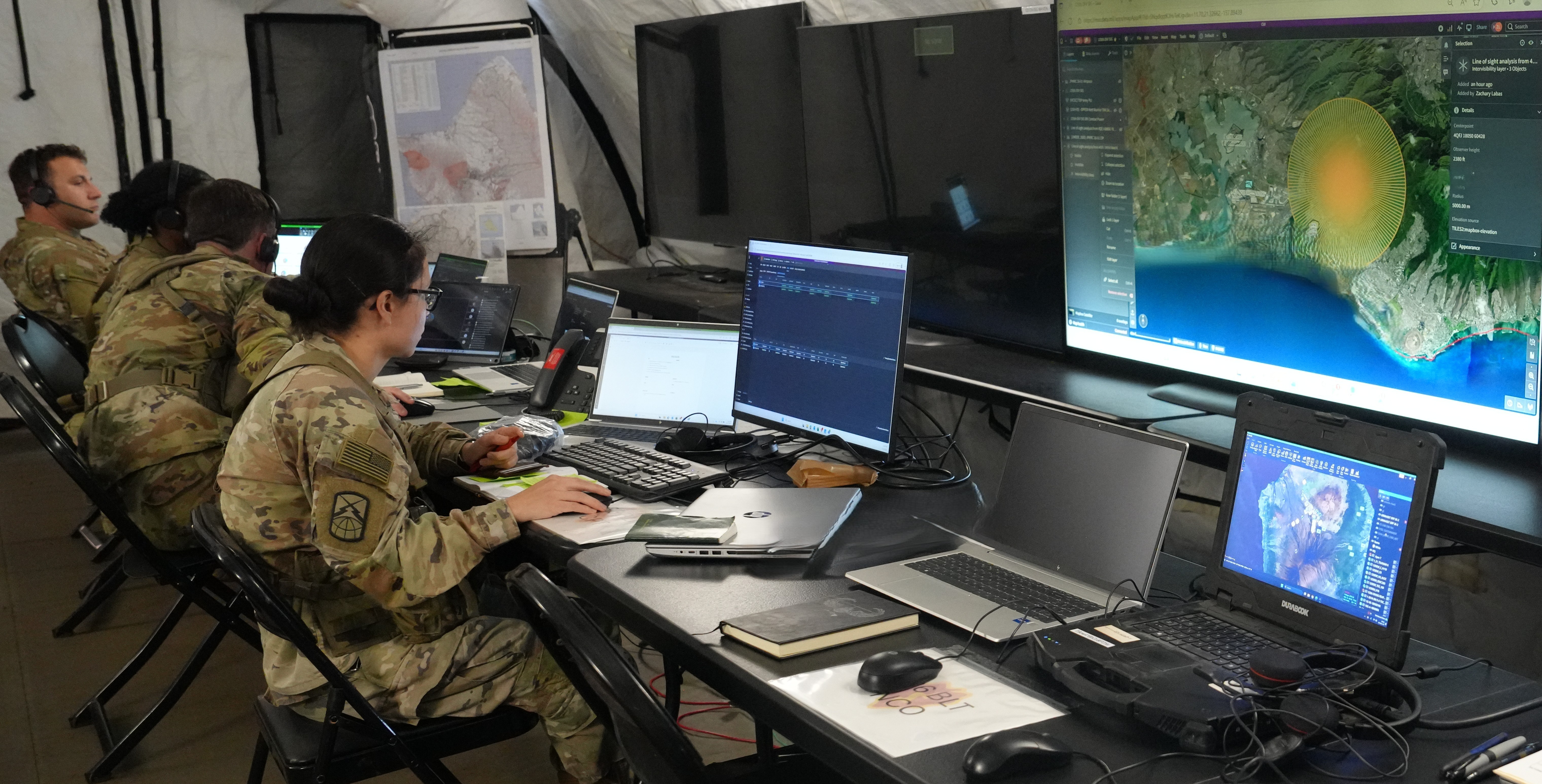
SCHOFIELD BARRACKS, Hawaii — A new theater, a new set of industry partners and a new approach are on deck for the next series of operational exercises helping the Army to prototype its transformational Next Generation Command and Control, or NGC2.
The 25th Infantry “Lightning” Division, recently coming off its Joint Pacific Multinational Readiness Center rotation, is the next formation preparing to evaluate and shape NGC2 to scale it for the broader Army.
NGC2 replaces legacy systems and technologies siloed by warfighting function and instead leverages rapid progress in commercial technology to introduce an integrated “full stack” capability ecosystem. At the top of the stack, applications ingest and share C2 data across all the warfighting functions for the commander’s decision overmatch — while the bottom layers provide transport and infrastructure capabilities to move data around the battlefield.
This fundamentally new approach is rapidly progressing through iterative, Soldier-driven experimentation supported by the 4th Infantry Division, and now the 25ID will also contribute its expertise to the effort, ahead of Army decisions on fielding NGC2 capabilities across the force.

The unit’s upcoming string of exercises, called “Lightning Surge,” begins in January 2026, and will be conducted in tandem with the 4 ID “Ivy” Division’s Ivy Sting exercise series for NGC2 prototype experimentation, which kicked off in September 2025 at Fort Carson, Colorado.
“Instrumental to sustaining peace through strength is our Next Generation Command and Control, complementing the 25th Infantry Division’s continuous transformation,” said Maj. Gen. Jay Bartholomees, commanding general, 25th ID. “We’re learning from 4th Infantry Division’s Ivy Sting series and look forward to quickly implementing their best practices and applications into our Lightning Surge events.”
At the heart of the NGC2 prototyping effort are multifaceted teams-of-teams that include numerous industry partners, working with the government through non-traditional acquisition pathways. This construct — designed to reduce the time between requirements, validation and capability delivery as part of the Army’s acquisition reform — puts Army transformation organizations and industry partners onsite with 4ID and 25ID Soldiers to rapidly prioritize capabilities and iteratively address challenges. This prototyping stage is informing the Army not only on NGC2 technology and operational use, but also on the construct for government-industry partnerships to maintain a competitive ecosystem that can continuously evolve capabilities.
Unlike the 4ID, which is prototyping NGC2’s full stack of capabilities, the 25ID will predominantly focus experimentation on the recently fielded apps and data layer software.
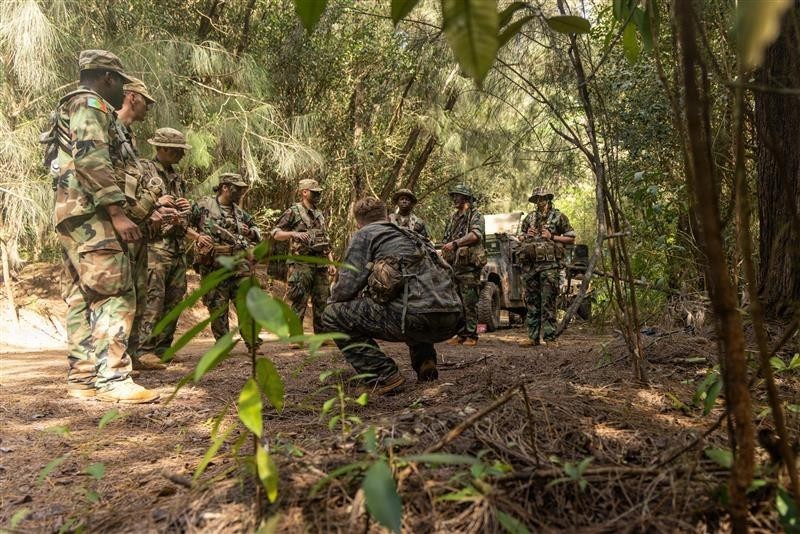
“The 25th Infantry Division recently received the Army’s more modern C2 Fix infrastructure and network transport capabilities, so we can focus our integration and Soldier feedback on NGC2 data and apps capabilities, contributed by a different industry team,” said Brig. Gen. Jack “Shane” Taylor, capability program executive for Command, Control, Communications, and Network. “Since no two divisions fight alike, it’s critical for the Army to diversify its NGC2 prototype efforts.”
To ensure best-of-breed capabilities, the Army intends to continue to competitively onboard vendors and teams for current and future NGC2 divisions, Taylor said.
The 25ID Lightning Surge exercises will first address data layer integration, followed by exercises focused on warfighting apps. Each exercise will address different pillars of capability, prioritized by the division’s commanding general, which are critical to its unique geography and area of operations.
“We’re setting conditions for Lightning Surge so we can start doing those data connections we know we’re going to need,” said Lt. Col. Adam Brinkman, who serves as both the 25ID’s Division’s G6 and Commander for its newly reactivated Signal Battalion. “This will be a great framework to organize, think around and apply to the vast area we have to fight in."
Lightning Surge experimentation will enable the division to utilize its common operating picture connections and introduce NGC2 capabilities to improve data integration, said Maj. Rebecca Borrebach, 25ID G6 data officer, who is working closely with the industry team prototyping NGC2 for 25ID.
“We believe NGC2 will improve on our current data visualization to correlate data from multiple sources,” Borrebach said. “It’s critical to get the data right first.”
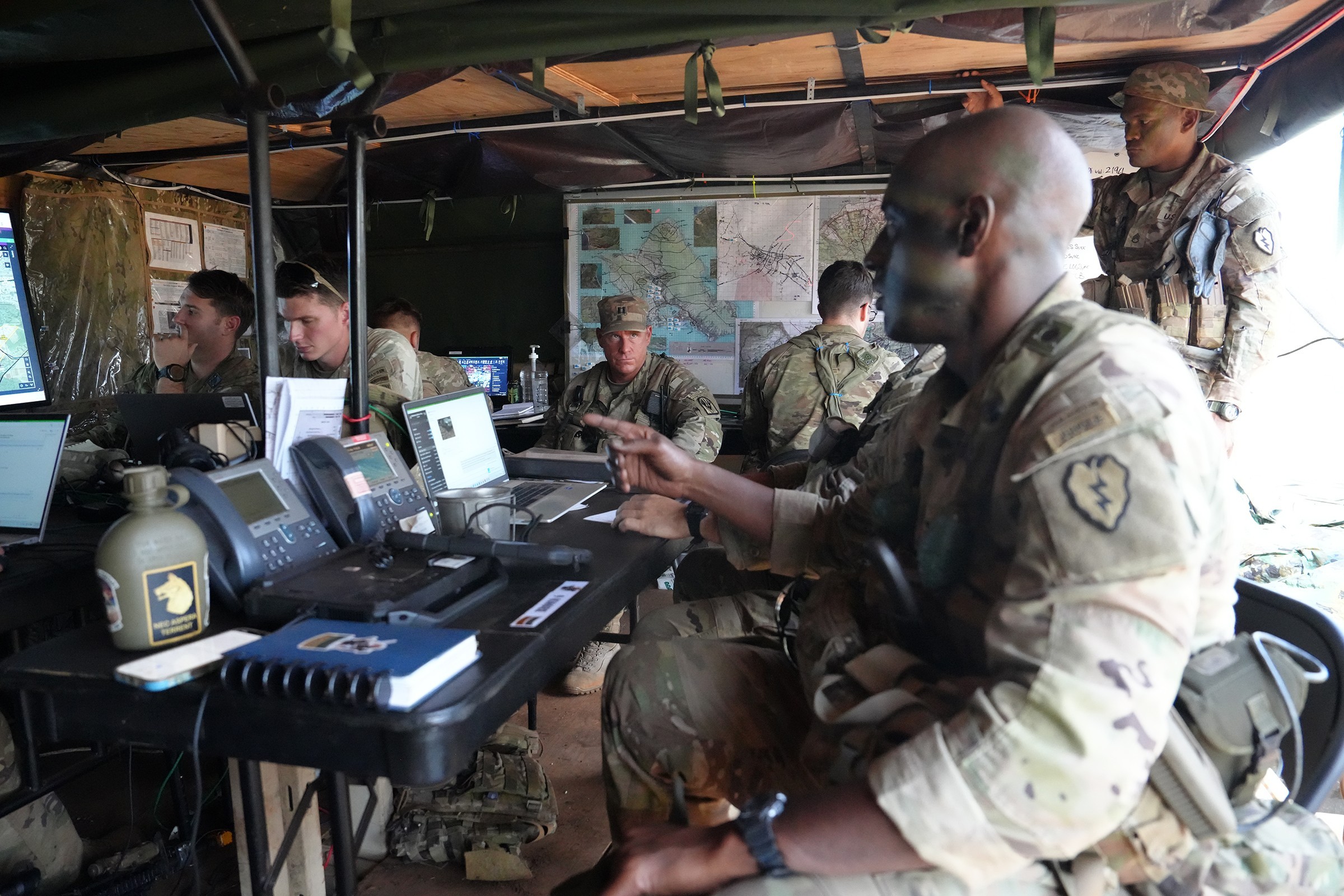
The division — a High Mobility Artillery Rocket System unit — will also focus on integrating data to enhance the fires digital kill chain. The fires commander’s access to data and artificial intelligence capabilities are critical to establishing an effective kill chain, which will increase lethality from initial sensor detection to final sensor observation, and include data on battle damage and effectiveness, Brinkman said. Future Lighting Surge events will also include AI-enabled airspace deconfliction capabilities, utilizing NGC2 to reduce the cognitive burden on operators.
“As we bring on small Unmanned Aerial Systems and understand swarms and drones, we need to understand how to create an accurate air picture for the division,” Brinkman said.
The Lightning Surge series will expand beyond data to software apps integration, with focus on logistics, AI and culminating in joint/multinational interoperability.
“If you look at the grand scheme, we've been fielded a lot of [capabilities],” Brinkman said, noting the Army’s increased speed to field is both necessary and desired. “As we increase our survivability, that's really what it comes down to at the end of the day, to fight and win our nation's wars.”
Social Sharing